


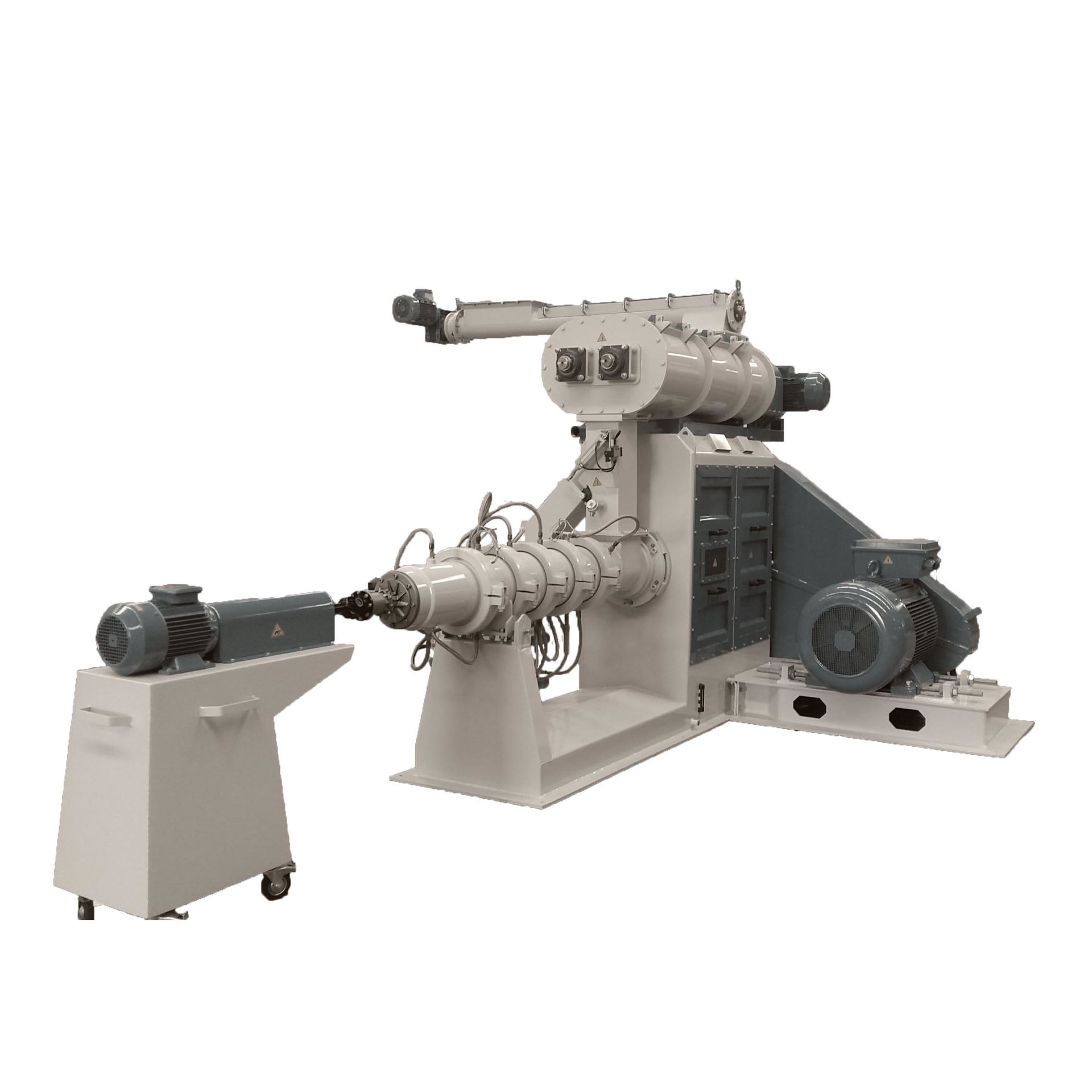
Working Principle in the Extrusion Chamber:
- Heating and moisture removal allow starch particles to gelatinize → becoming flexible and easier to shape.
- Compression and friction in the extrusion barrel create a dough-like “plastic mass” that is pushed through a die.
- A cutting blade shapes the material into the desired form before drying and cooling.
- Adjustable parameters: temperature, moisture, screw speed, ingredient ratio → determine floating ability, expansion, and nutritional value.
Single-Screw Extruder – Efficient single-screw extrusion solution:
- Robust design, continuous operation
- Energy-efficient
- Easy to disassemble and clean
- Uses V-belt or direct drive
- Low spare part costs
- Produces stable product quality, easy to control
- Compatible with various formulations (floating, slow-sinking, soft-shell feed, etc.)
Optional Upgrade – Expansion Control System (ECS):
- ECS controls product bulk density and expansion rate right at the cutter.
- Uses compressed air pressure to alter pellet expansion.
- Allows production of floating, sinking, hard-shell aquatic, bottom-sea feed…
- Ensures consistent product quality, adaptable to different animal feed lines.
Advantages of Extrusion:
- Optimizes nutritional value
- Reduces or eliminates antinutritional factors (ANFs)
- Produces uniform pellet shape
- Ensures uniform moisture and gelatinization
- Customizable to customer needs and product lines
Related products
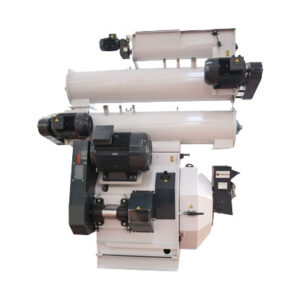
Feed Solutions
Feed Solutions
Feed Solutions
Feed Solutions
Feed Solutions
Feed Solutions
Feed Solutions
Feed Solutions


